RESCU

First-principles large-scale system KS-DFT computing software

Current version: 2023A

Alchemist

RESCU (Real Space Electronic Structure CalcUlator) is a KS-DFT calculation software that can study very large systems with just a small computer. It combines the respective advantages of plane waves, linear combinations of atomic orbitals, variable-precision meshes, and Chebyshev filtering algorithms. Through optimizations in multiple numerical algorithms, it significantly reduces the burden of traditional DFT calculations while ensuring the accuracy of DFT calculations, making DFT calculations for systems containing tens of thousands of atoms possible. It is a landmark new approach to solving the KS-DFT problem of very large systems. RESCU is currently widely applied in various fields such as metals, semiconductors, insulators, liquids, DNA, 1D, 2D, 3D, surfaces, molecules, magnetic, non-magnetic, impurities, solids, etc.

Main Functions

Boundary condition

  • Periodicity, Dirichlet, and von Neumann open boundaries

Exchange correlation functional

  • LDA, GGA, mBJ, and hybrid functionals HSE support over a hundred functionals in the libxc library

DFT+U method for strongly correlated systems

  • DFT+U method for strongly correlated systems

Electronic structure

  • Band unfolding, band projection, band decomposition, projected density of states, local density of states, Mariken charge distribution

Magnetic properties

  • Linear spin, nonlinear spin, spin-orbit coupling

Structural relaxation

  • Steepest descent method, conjugate gradient method, quasi-Newton method

Mechanical properties

  • Force analysis of equation of state and phonon spectrum (frozen phonon method)

DFPT

  • Dielectric tensor, optical properties, phonon calculation, Raman tensor and intensity, electron-phonon coupling

Software Highlights

RESCU software highlights

A larger system

  • RESCU generates highly efficient initial Hilbert subspaces by using numerical atomic orbitals (NAO) and employs Chebyshev filtering to completely avoid the process of solving eigenvalues in the entire Hilbert space to precisely solve the KS equation.
  • By optimizing the algorithm for solving the KS equation, RESCU can reduce the computational load that was originally proportional to the cube of the system size. In the test, RESCU's computational load was only 2.3 to the power of the system size when using the real-space discrete lattice basis set to calculate a system with more than 6,000 atoms.
  • When calculating large systems, using real-space discrete lattice basis vectors can achieve the same level of accuracy as other standard plane wave basis vector KS-DFT software, while using NAO basis vectors maintains the same level of accuracy as other standard LCAO basis vector KS-DFT software.

Higher efficiency

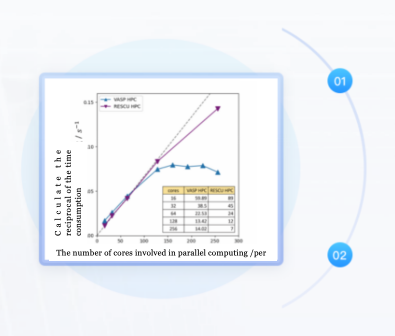
  • When the system contains tens of thousands of electrons, RESCU adopts a brand-new partial Rayleigh-Ritz algorithm to ensure extremely high computational efficiency. It features high parallel efficiency and excellent scalability, achieving a nearly linear speedup ratio even when there are a large number of cores.

Application Cases

Moire pattern simulation

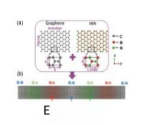
1D Moire pattern simulation

1D Moire pattern simulation

ref. Physical Review Letters, 121(18): 186403(2018)
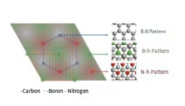
2D Moire pattern simulation

2D Moire pattern simulation

ref. Physical Review Materials, 1(6): 061003(2017)
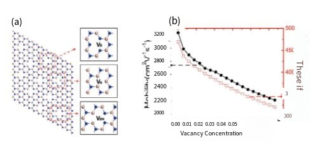
Carrier mobility

Simulation of carrier mobility at different vacancy concentrations

Simulation of carrier mobility at different vacancy concentrations

ref. 2D Materials.4(4 045014(2017)
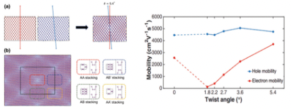
Simulation of carrier migration in twisted graphene

Simulation of carrier migration in twisted graphene

ret. Physical Review B. 96(19): 195406(2017)
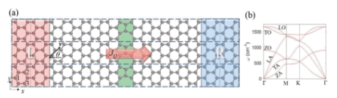
Response theory

Phonon spectrum calculation

Phonon spectrum calculation

ref. Physical Review B,99(6): 064302 (2019)
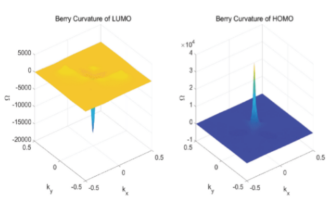
Berry rate calculation

Berry rate calculation

ref. Physica E: Low-dimensional Systems and Nanostructures, 126: 114390(2021)
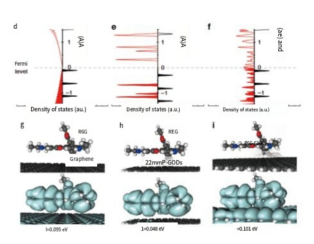
Electronic structure calculation

Simulation of density of states and charge transfer

Simulation of density of states and charge transfer

ref. Nature Communications, 9(1): 193(2018)
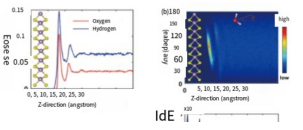
Electronic structure calculation
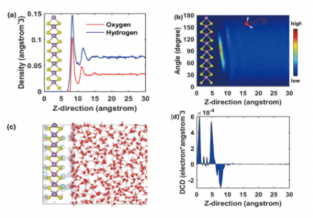
H2O Molecular dipole analysis and differential charge analysis

H2O Molecular dipole analysis and differential charge analysis

ref. npj Computational Materials,7(1): 1-9(2021)
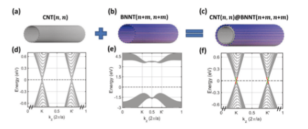
Energy band simulation of carbon nanotubes

Energy band simulation of carbon nanotubes

ref. Nano Letters, 19(6): 4146-4150(2019)
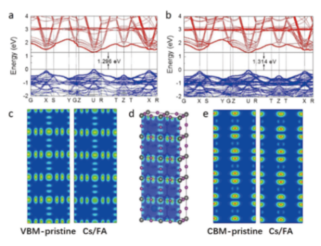
Removal band calculation of low-concentration doped dense Brillouin region

Removal band calculation of low-concentration doped dense Brillouin region

ref. ACS Applied Materials & Interfaces, 11(14): 13812-13821(2019)